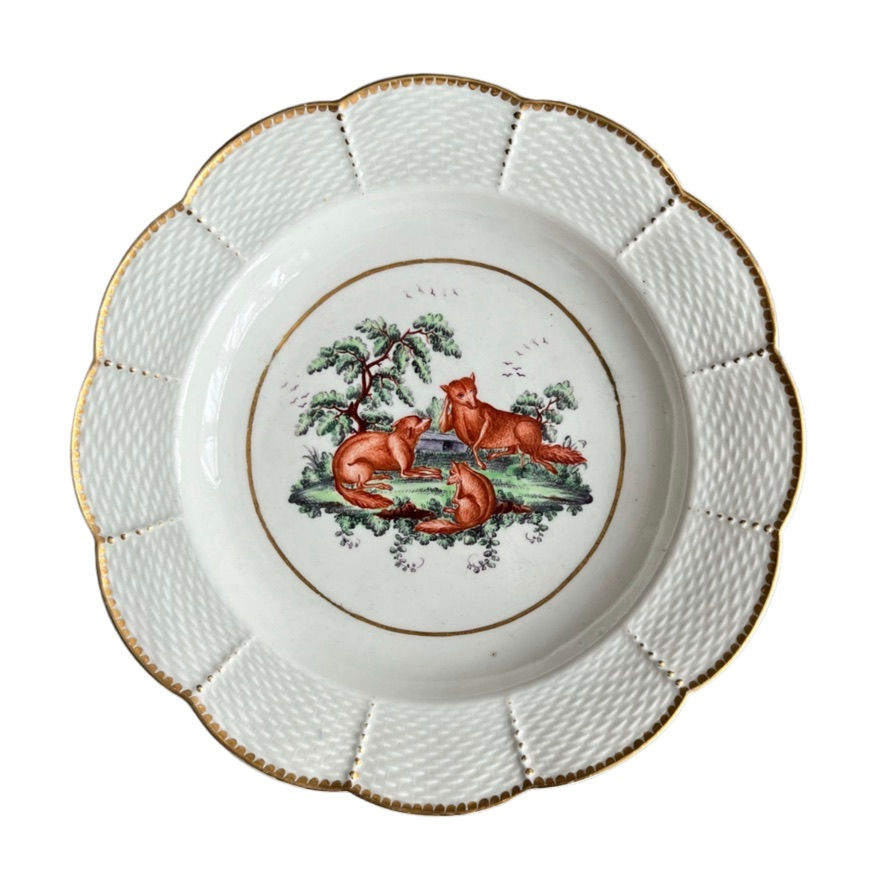
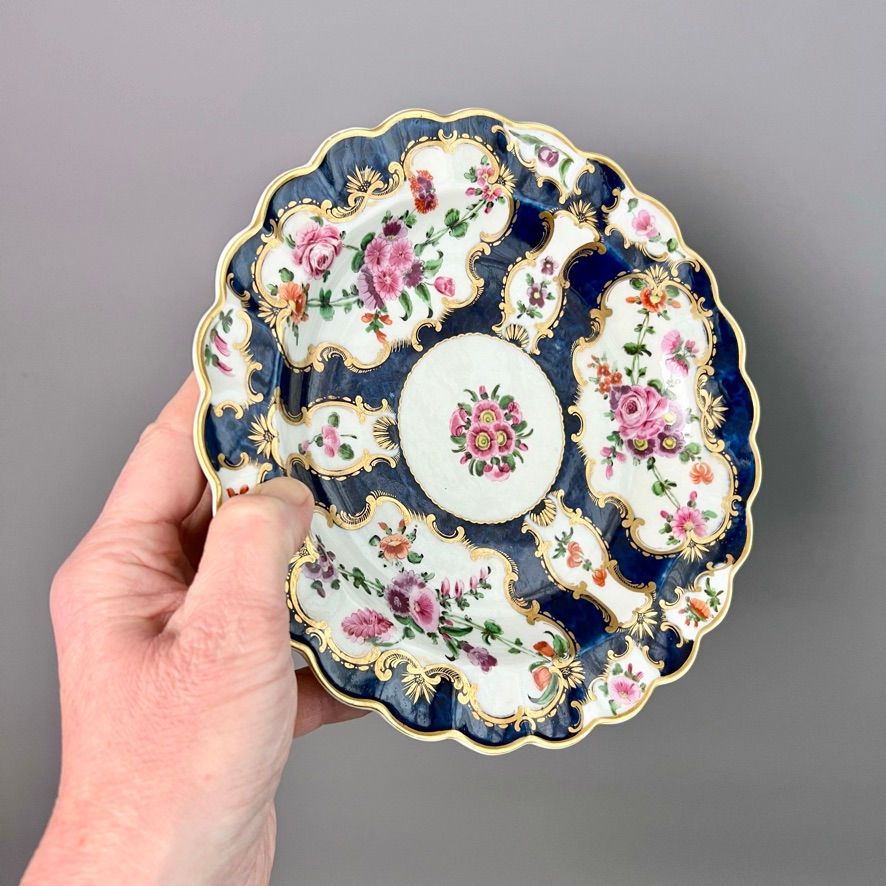
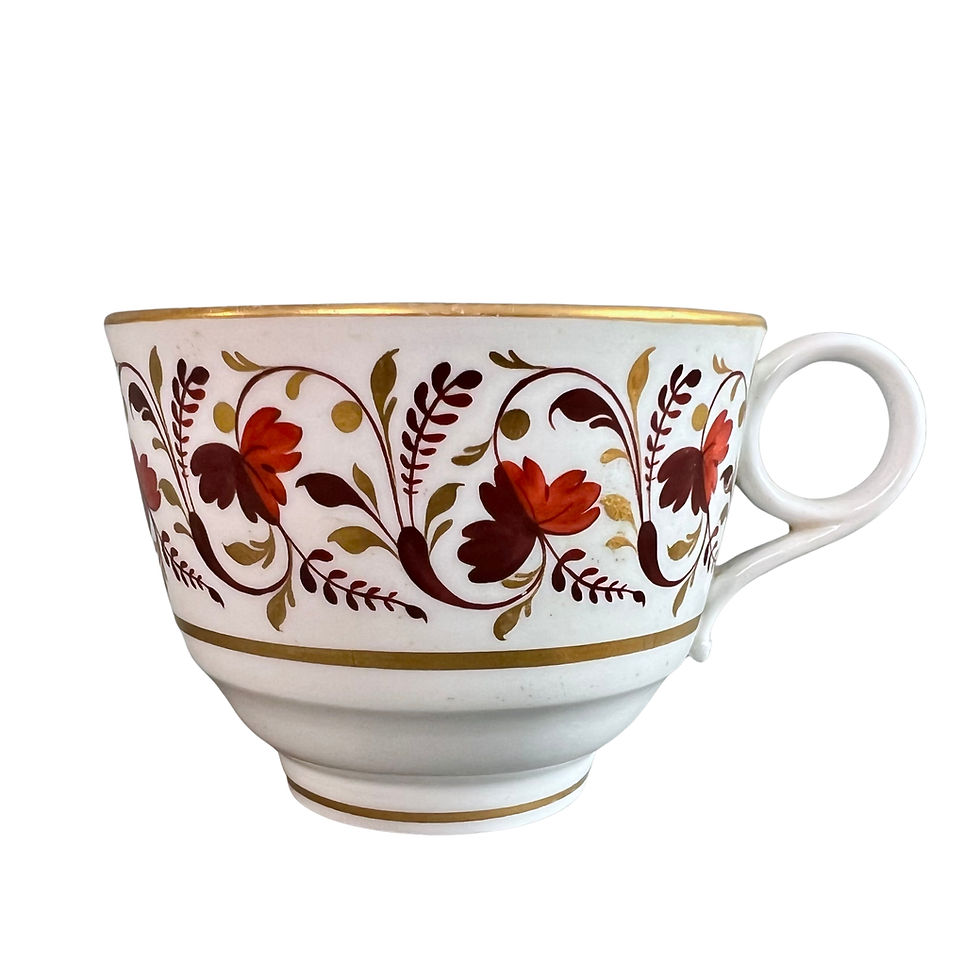
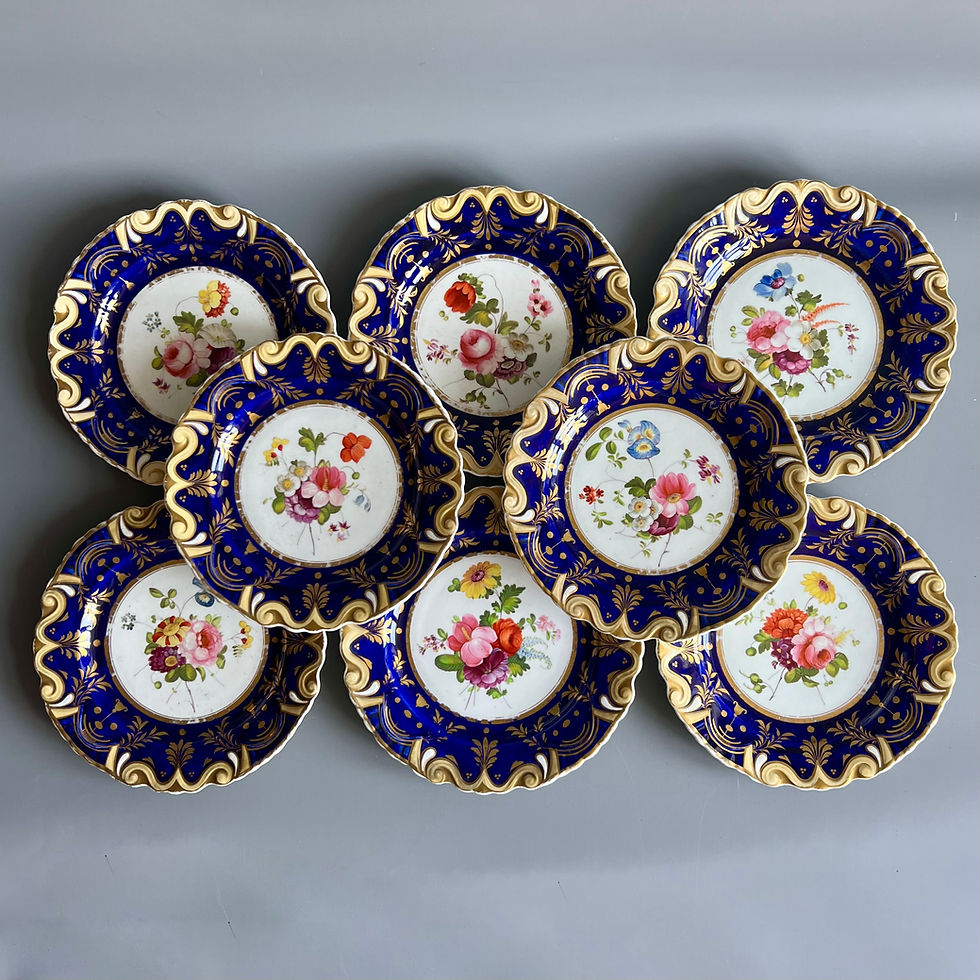
This is a spectacular set of eight plates made by Barr Flight & Barr between 1811 and 1813. They are made in one of the many versions of the "Imari Fence" or "Japan" pattern.
Barr Flight & Barr was the continuation of the famous Worcester Porcelain Company. In fact the factory went through various partnerships and names, most of which involved either the name Barr, Flight, or both (or double!). This confusing period in the factory's existence is often called the "Flight & Barr" period. Eventually the factory absorbed some of its spin-offs and was turned into the Royal Worcester, which became very famous in the late 19th and 20th Centuries. During the late 18th and entire 19th Century they were among the leaders of china production, producing exceptionally finely painted and sculpted forms.
This set is painted with the famous "Imari Fence" pattern, sometimes called the "Japan" pattern. Many versions exist of this pattern. It was first commissioned in 1811 by George upon becoming the Prince Regent, for use in his equally outrageously designed seaside Pavilion in Brighton. The pattern consists of a jumble of Japanese Imari-inspired bright flowers, trees, birds, rocks, stars and fences in bright colours, beautifully painted and gilded with bold strokes. These Japan patterns were among Flight & Barr's most popular designs for several decades.
Each plate has a beautiful rim around it in a red ground colour with rich gilt decoration.
All items have the imprinted crowned BFB mark, as well as a printed mark with Royal Warrant and the address of their showroom at London House in 1 Coventry Street, London, which was used until the year 1813.
CONDITION REPORT The set is in excellent antique condition without any damage, repairs or crazing and only some minimal wear, as visible in the pictures.
Antique British porcelain is never perfect. Kilns were fired on coal in the 1800s, and this meant that china from that period can have some firing specks from flying particles. British makers were also known for their experimentation, and sometimes this resulted in technically imperfect results. Due to the shrinkage in the kiln, items can have small firing lines or develop crazing over time, which should not be seen as damage but as an imperfection of the maker's recipes, probably unknown at the time of making. Items have often been used for many years and can have normal signs of wear, and gilt can have signs of slight disintegration even if never handled. I will reflect any damage, repairs, obvious stress marks, crazing or heavy wear in the item description but some minor scratches, nicks, stains and gilt disintegration can be normal for vintage items and need to be taken into account.
There is widespread confusion on the internet about the difference between chips and nicks, or hairlines and cracks. I will reflect any damage as truthfully as I can, i.e. a nick is a tiny bit of damage smaller than 1mm and a chip is something you can easily see with the eye; a glazing line is a break in the glazing only; hairline is extremely tight and/or superficial and not picked up by the finger; and a crack is obvious both to the eye and the finger. Etcetera - I try to be as accurate as I can and please feel free to ask questions or request more detailed pictures!
DIMENSIONS (diameter): 20.5cm (8.1").