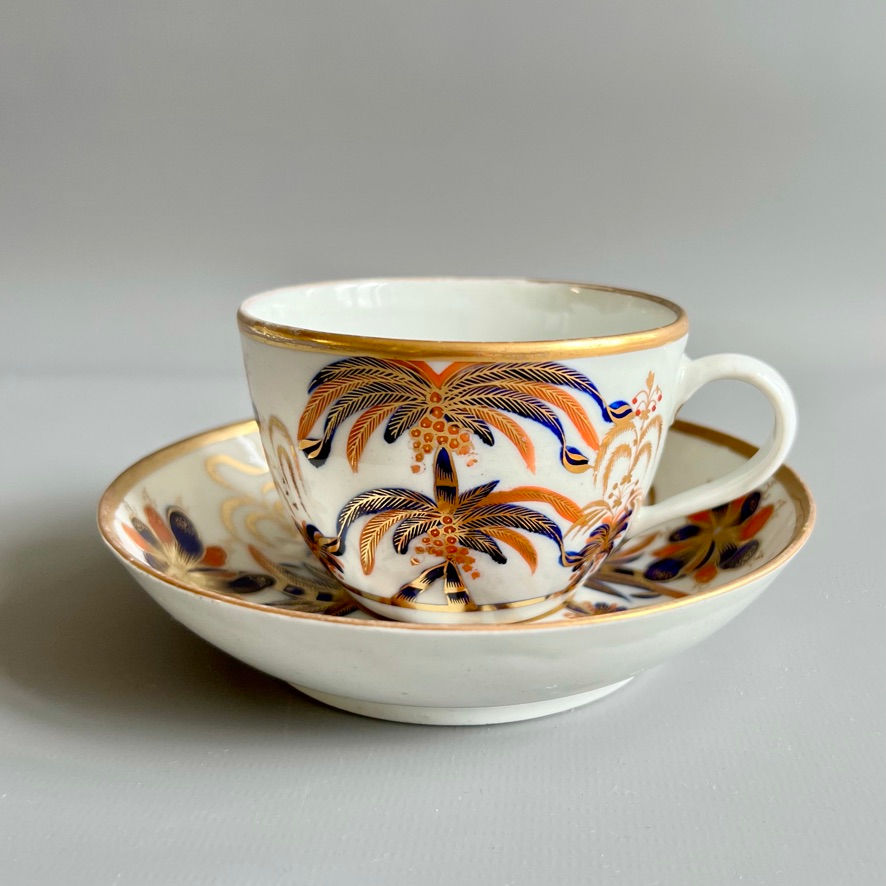
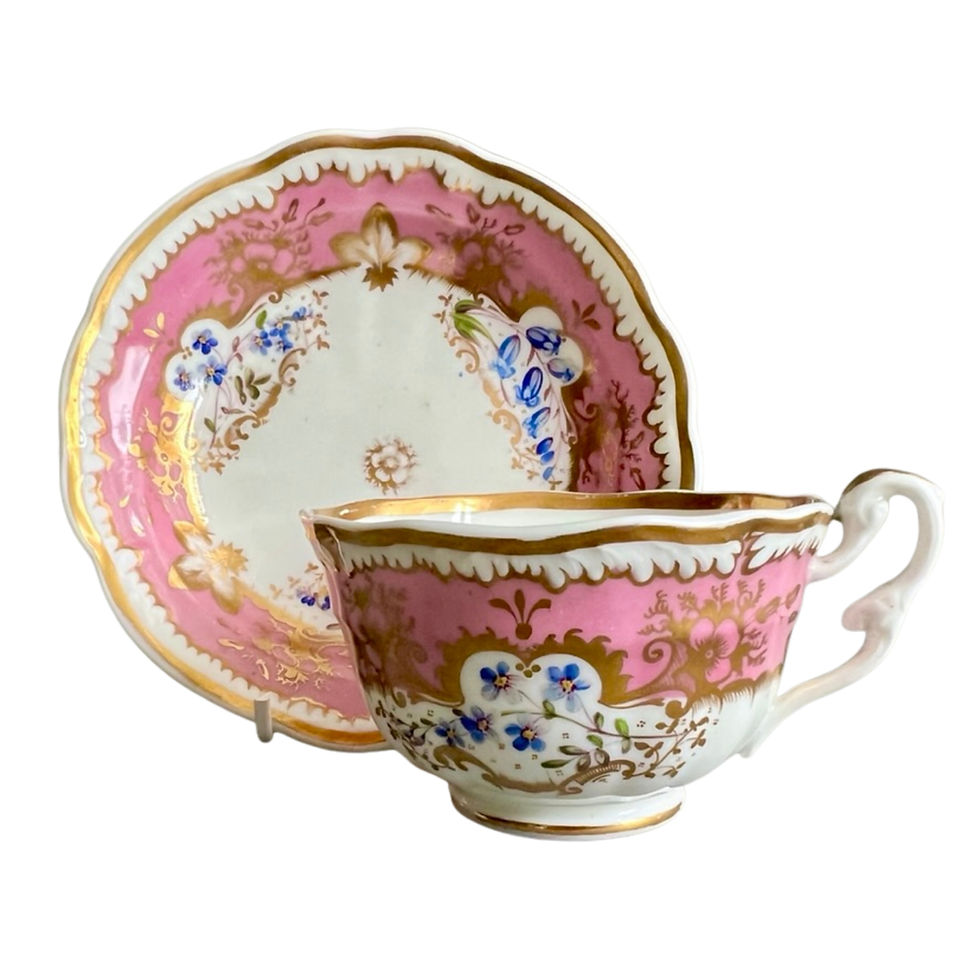
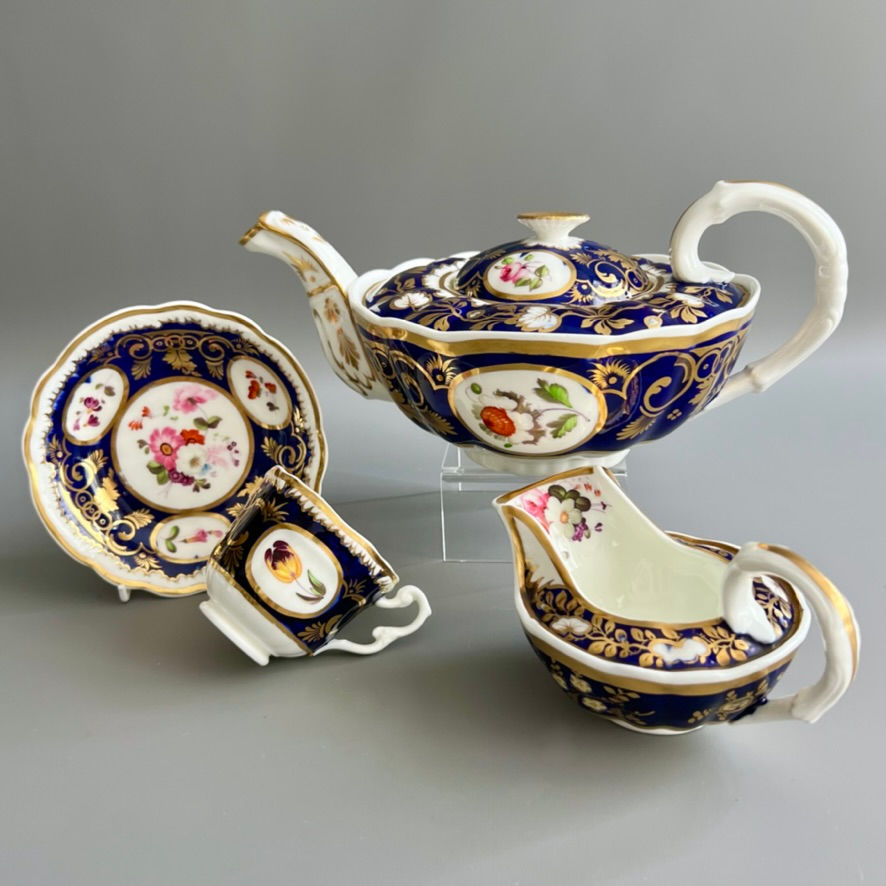
This is a beautiful orphaned tea bowl made by New Hall in around 1795.
The New Hall factory started as a cooperative of several Staffordshire potters making use of the porcelain license of Bristol Porcelain Company after this went in demise. It quickly grew out to be a leading porcelain maker, and the first to make true porcelain in Staffordshire.
This bowl is made in the typical "hybrid hard paste" porcelain, as New Hall had adapted the original hard paste recipe from Bristol, but adapted it slightly in order to save on production costs. You can tell this by the way the porcelain is less milky than bone china. As this hybrid porcelain was slightly cheaper to make and very popular among customers who were used to the more stony Chinese Export porcelain, New Hall was a late adapter of bone china, which was already used by most other factories around the time this set was made.
This cup is potted in hybrid porcelain and decorated with the "knitting wool" pattern no. 195. This derives its name from the border pattern, which seems like the threads of a knitwork. There are little hand painted flowers dotted around the surface.
An image of the tea set this originally belonged to can be found in plate 48, page 128 of Geoffrey A. Godden's "New Hall Porcelains".
CONDITION REPORT The cup is still looks bright but it has a crack in the wall, as well as a spider line in the glaze on the underside. These flaws are reflected in the price.
Antique British porcelain is never perfect. Kilns were fired on coal in the 1800s, and this meant that china from that period can have some firing specks from flying particles. British makers were also known for their experimentation, and sometimes this resulted in technically imperfect results. Due to the shrinkage in the kiln, items can have small firing lines or develop crazing over time, which should not be seen as damage but as an imperfection of the maker's recipes, probably unknown at the time of making. Items have often been used for many years and can have normal signs of wear, and gilt can have signs of slight disintegration even if never handled. I will reflect any damage, repairs, obvious stress marks, crazing or heavy wear in the item description but some minor scratches, nicks, stains and gilt disintegration can be normal for vintage items and need to be taken into account.
There is widespread confusion on the internet about the difference between chips and nicks, or hairlines and cracks. I will reflect any damage as truthfully as I can, i.e. a nick is a tiny bit of damage smaller than 1mm and a chip is something you can easily see with the eye; a glazing line is a break in the glazing only; hairline is extremely tight and/or superficial and not picked up by the finger; and a crack is obvious both to the eye and the finger. Etcetera - I try to be as accurate as I can and please feel free to ask questions or request more detailed pictures!
DIMENSIONS diameter 8.5cm (3.3").