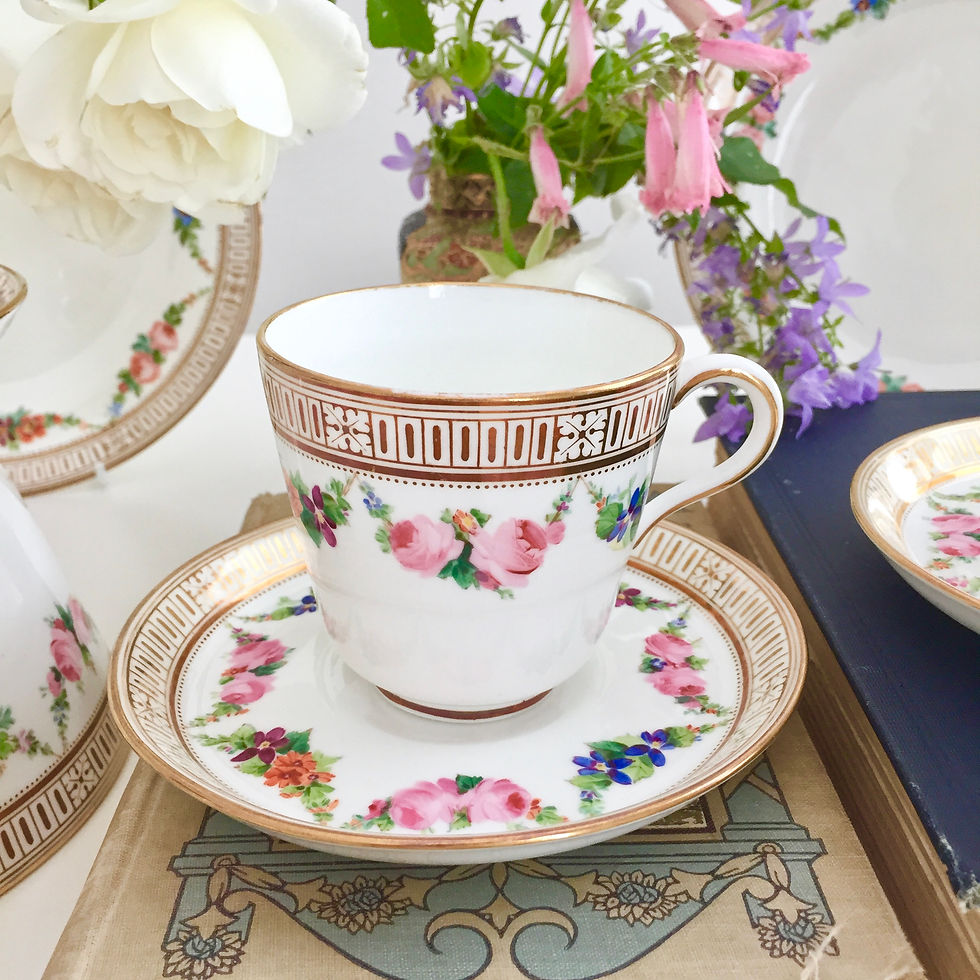
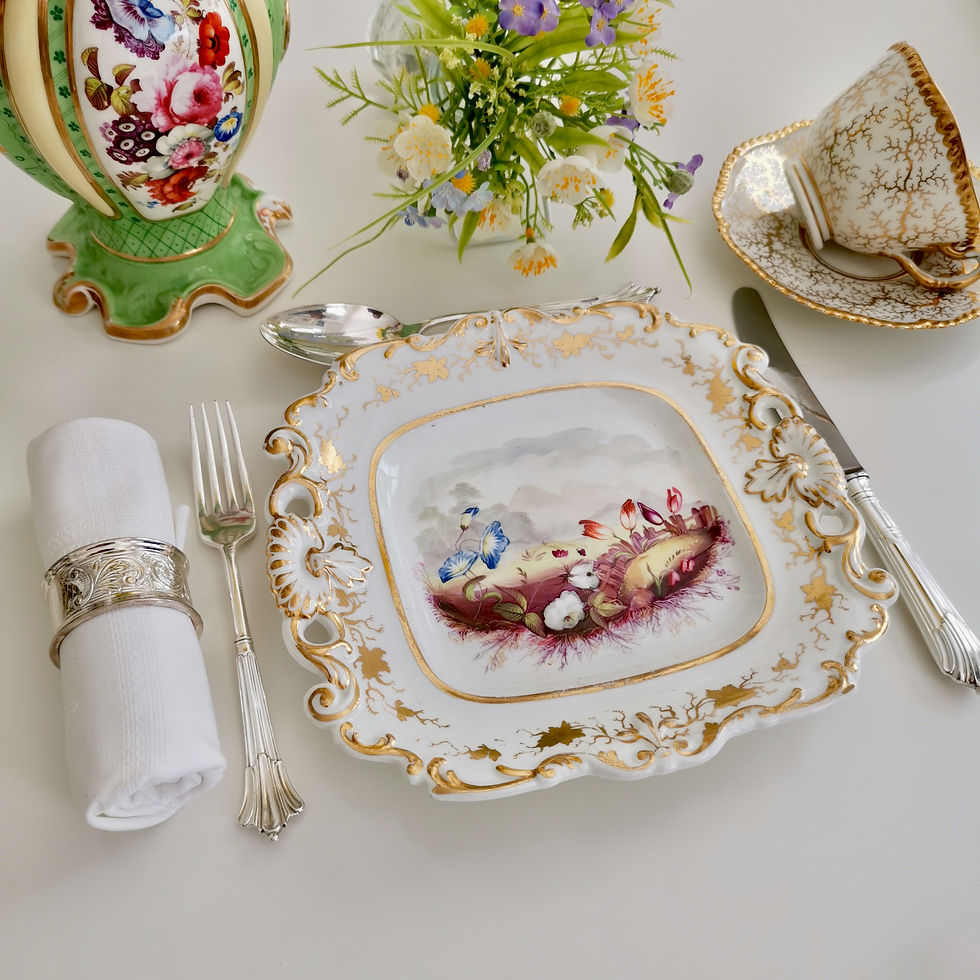
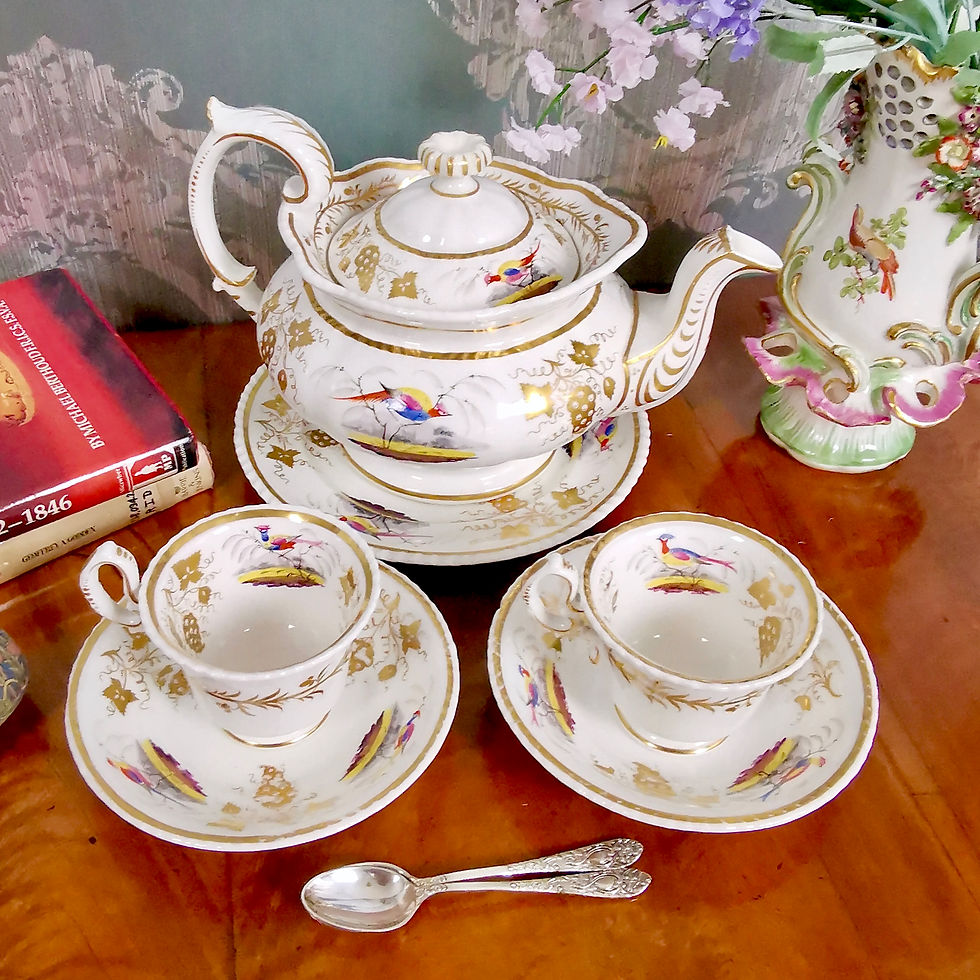
This is a charming teacup trio consisting of a teacup, a saucer and a side plate in the well-known and beautiful "cabbage leaf" pattern. The teacup and saucer were made by Spode between 1815 and 1830, and the side plate by Spode's successor Copeland Spode between 1875 and 1890.
Spode was the great pioneer among the Georgian potters in England. Around the year 1800 he perfected the bone china recipe that has been used by British potters ever since, and he was also the leading potter behind the technique of transferware, making it possible for English potters to replace the Chinese export china, which had come to an end around that time, with their own designs. This was fundamental to a thriving industry that would last for about 150 years and provide half the world with their tableware.
The factory went through several name changes: after it was called Spode came the names Copeland, Copeland & Garrett and Copeland Spode.
These items were made in the famous "stone china" body that Spode invented; strictly speaking this is not porcelain, but a very hard type of earthenware that is more chip-proof than bone china and therefore appropriate for tableware. You can see that the body of these items is greyish; a beautiful ground for the famous "tobacco leaf" pattern that is an imitation of a tranditional Chinese pattern.
The teacup and saucer are stamped with the Spode Stone China mark that was used between 1815 and 1830; the side plate with the Copeland Spode mark that was used between 1875 and 1890.
CONDITION REPORT All items are in perfect antique condition without any damage, repairs or crazing, and very little wear.
Antique British porcelain is never perfect. Kilns were fired on coal in the 1800s, and this meant that china from that period can have some firing specks from flying particles. British makers were also known for their experimentation, and sometimes this resulted in technically imperfect results. Due to the shrinkage in the kiln, items can have small firing lines or develop crazing over time, which should not be seen as damage but as an imperfection of the maker's recipes, probably unknown at the time of making. Items have often been used for many years and can have normal signs of wear, and gilt can have signs of slight disintegration even if never handled. I will reflect any damage, repairs, obvious stress marks, crazing or heavy wear in the item description but some minor scratches, nicks, stains and gilt disintegration can be normal for vintage items and need to be taken into account.
There is widespread confusion on the internet about the difference between chips and nicks, or hairlines and cracks. I will reflect any damage as truthfully as I can, i.e. a nick is a tiny bit of damage smaller than 1mm and a chip is something you can easily see with the eye; a glazing line is a break in the glazing only; hairline is extremely tight and/or superficial and not picked up by the finger; and a crack is obvious both to the eye and the finger. Etcetera - I try to be as accurate as I can and please feel free to ask questions or request more detailed pictures!
DIMENSIONS (diameters): cup 9.5cm (3.75"), saucer 15cm (6"), side plate 16cm (6.25").